
Opinion and directional analysis. This is an op-ed based on public information and our own read of the market at the time of writing. It may be out of date by the time you read it. Anything resembling a number here is a third-party estimate or an informed guess, subject to change and independent validation. We are not affiliated with Google, Booking Holdings, Expedia Group, or any company named below. Nothing here is business, legal, or financial advice.
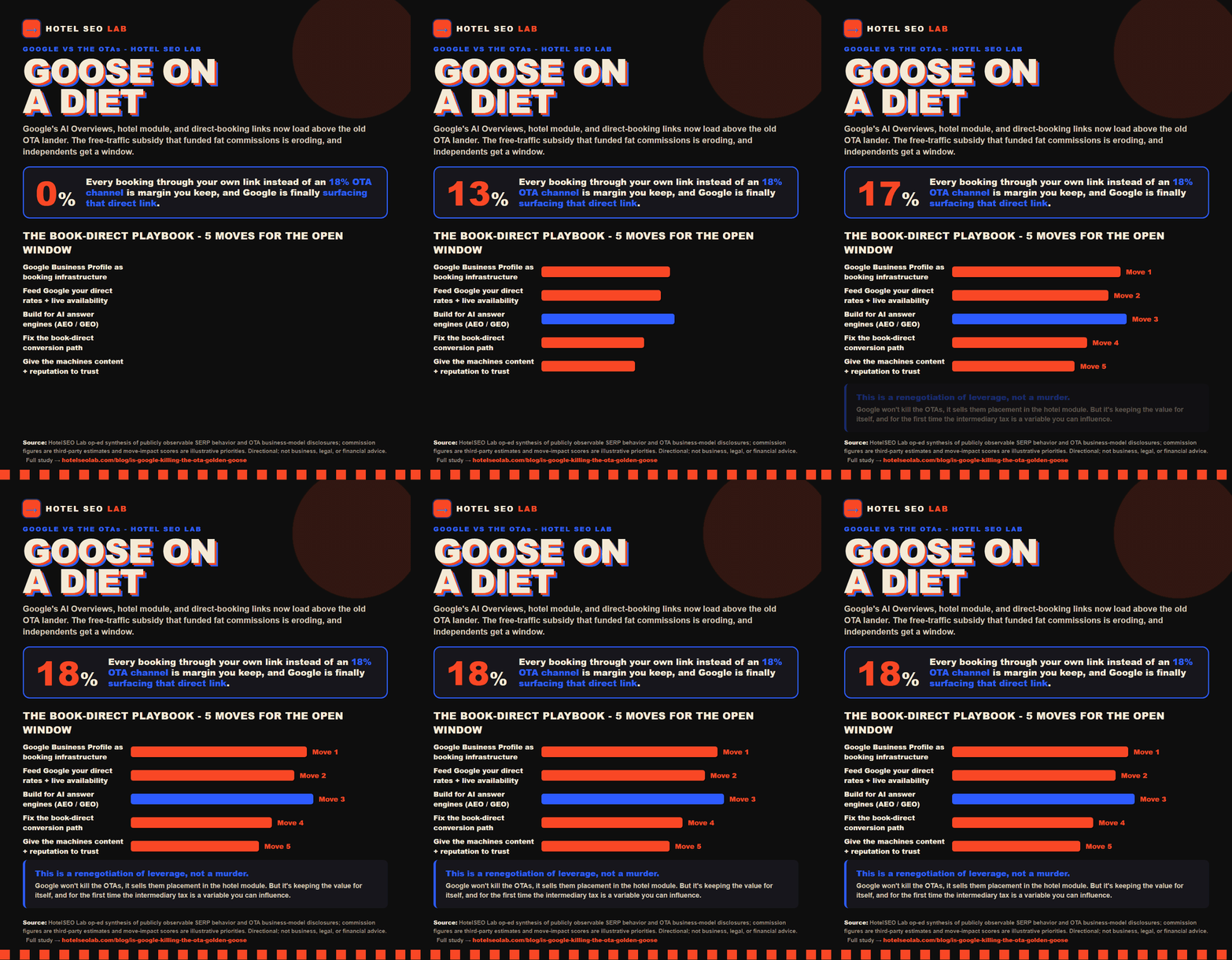
Download this study as a one-page PDF
The goose that laid Google’s golden egg
For twenty years, the online travel agencies and Google had one of the most profitable symbiotic relationships in the history of the internet. The OTAs — Booking, Expedia, Hotels.com, Agoda, and the rest — built enormous, SEO-optimized landing pages for every city, neighborhood, and “hotels near [landmark]” query imaginable. Google ranked them. Travelers clicked. The OTAs then turned around and bought back a chunk of that same traffic through Google Ads, becoming, by most estimates, some of Google’s single largest advertising customers.
It was a beautiful arrangement. The OTAs got cheap organic traffic and paid traffic. Google got billions in ad spend. The independent hotel — the actual business with the actual beds — got to pay 15 to 25 percent commission for the privilege of being listed on a page it could never outrank on its own. We have written at length about how OTAs engineered their dominance of hotel search, and about the destination landing pages that made it possible.
Here is the op-ed thesis, stated plainly: I think Google is quietly starting to eat its own golden goose. And if I am right, the second-order consequences for independent hotels are more interesting — and more hopeful — than the doom-scroll headlines suggest.
What actually changed on the results page
Type “best boutique hotel in Savannah” into Google today and look at what you get before you get a single blue link. Depending on the query and your location, you may see:
- An AI Overview that synthesizes a shortlist of named hotels, sometimes with a sentence of reasoning about each, pulled from across the web.
- The hotel module — Google’s own map-plus-listings widget with photos, star ratings, review scores, and, critically, live prices with booking links.
- A “Book on official site” link wired directly to the hotel’s own booking engine, sitting right next to the OTA rate.
Only after all of that do you reach the traditional organic results — the ten blue links where the OTA destination landers used to reign. The OTA page is still there. It is just now the third thing a traveler sees, not the first. Attention is finite, and Google has spent five years moving the answer higher and higher up the page.
The mechanism matters. AI Overviews and the hotel module are not sending the user to a webpage to get their answer. They are answering on Google’s surface, then offering to complete the booking through Google’s monetized links. That is the difference between Google being a directory that points at OTAs and Google being a destination that competes with them.
Why this squeezes the OTA model specifically
The OTA flywheel has always depended on one thing above all: cheap, high-intent organic traffic from Google. Free clicks on a “hotels in [city]” page are the raw fuel. The OTA converts a slice of them to bookings, and it recycles the economics by outbidding independent hotels for the branded and non-branded paid terms on top.
Take away the free organic clicks — or push them below three or four Google-owned modules — and the flywheel loses torque. The OTA now has to buy more of its traffic to hit the same booking volume, which raises its customer acquisition cost, which pressures the very commission margins that made the whole thing lucrative. Meanwhile Google captures more of the transaction value on its own surfaces, where it sells the OTAs placement anyway.
The uncomfortable truth for the OTAs: they helped train the market to expect the answer on the results page. Google learned the pattern from watching what people clicked, then internalized it. The scraper got scraped.
I want to be careful not to overclaim. Google is not going to nuke the OTAs. It cannot — they are advertisers, and the hotel module monetizes largely by selling those same OTAs (and, increasingly, the hotels) paid slots. This is not a murder. It is a renegotiation of leverage, conducted one SERP feature at a time, in Google’s favor. The golden goose is not being killed. It is being put on a diet, and told the eggs now belong to the farm.
The AI answer-engine wildcard
Here is where it gets genuinely destabilizing, and where the independent hotel should pay attention.
Google is not the only game anymore. A growing slice of “where should I stay in [city]” research is happening inside ChatGPT, Perplexity, Gemini, and Claude. These engines do not route the user through an OTA destination lander at all. They read the web, synthesize an answer, and name specific hotels. If your property is described well across the sources these models trust, you can get recommended directly — no OTA intermediary, no metasearch auction, no commission.
We have made this case before in is your hotel invisible to ChatGPT, and it is the whole premise of our AI visibility, AEO and GEO service. The strategic point for this op-ed is that AI answer engines are a second force pulling attention away from the OTA-dominated organic web — and they are far less friendly to the OTA model than Google has ever been, because they were not built on the ten-blue-links auction that the OTAs mastered.
There is also a fascinating data dimension here that most operators miss: the AI models are hungry for structured, trustworthy signals about what a property is actually like, and some of the richest sources of that are the guest-generated data platforms hotels already use. We dug into one example in Flip.to, Spacetime, and the sleeping-giant AI data play. The takeaway: the raw material that makes an AI recommend you is often sitting in systems you already own.
So who actually wins?
Let me reason through the players, because “Google kills OTAs, hotels rejoice” is far too simple.
Google wins in the near term. More of the transaction happens on its surfaces, more monetization accrues to the hotel module and Ads, and it dictates the terms. The risk to Google is regulatory — antitrust scrutiny of self-preferencing in travel is real, and a hotel module that buries organic results while promoting Google’s own links is exactly the kind of thing regulators have started to notice.
The OTAs adapt, because they always do. They pivot harder into loyalty programs, app-direct bookings, and package deals that Google cannot easily disintermediate, and they lean on markets where their brand is the destination. Booking and Expedia are not fragile. But the free-traffic subsidy that made independent-hotel commissions so juicy is eroding, and that is a structural change, not a blip.
The independent hotel gets a window. This is the part I care about. When Google surfaces a “Book on official site” link right next to the OTA rate, and when AI engines name properties directly, the distance between a traveler and your booking engine shrinks. For the first time in a long time, the intermediary tax is a variable you can influence rather than a fixed cost of existing.
But — and this is the whole game — that window only helps hotels that have done the work to be findable and citable on their own terms.
What independents should actually do about it
Reasoning about macro dynamics is fun; it does not book rooms. Here is what this op-ed implies for your actual to-do list.
1. Treat your Google Business Profile as core booking infrastructure, not a chore. The hotel module is fed by exactly this data. Photos, categories, review velocity, Q&A, and — crucially — the direct-booking link and rate accuracy determine whether Google’s own surface sends the traveler to you or to the OTA sitting beside you. Our Google Business Profile playbook for hotels and our local SEO and GBP service exist for precisely this moment.
2. Get your rates and availability into Google directly. If Google is going to answer the query and surface a booking link, you want your official rate to be the one that shows — and to show as competitive. This is a distribution and connectivity project as much as a marketing one. The economics of winning that click are the same book-direct math we broke down in the true cost of OTA commission: every booking that comes through your own link instead of a 18 percent channel is margin you keep.
3. Build for the answer engines in parallel. Do not bet the property on Google alone re-routing traffic to you out of generosity. Make sure your site, your descriptions, and your third-party mentions give ChatGPT, Perplexity, and Gemini clean, specific, quotable material. That is the AEO and GEO work, and it is the closest thing to an OTA-free acquisition channel that exists right now.
4. Fix the conversion path so the shrinking pool of direct clicks actually converts. If Google and the AI engines do hand you a more direct traveler, and your booking engine is a slow, three-page, rate-parity-confused mess, you have wasted the gift. This is unglamorous book-direct conversion work, and it is where a surprising amount of the upside actually lives.
5. Make your content and reputation give the machines something to trust. AI Overviews and answer engines synthesize from what the web says about you, not just what you say about yourself. Consistent, specific, honest content and reputation signals are what get you named. Extended-stay and aparthotel operators in particular have a specificity advantage here, as we noted in aparthotel and extended-stay marketing — niche clarity is exactly what a model latches onto.
The honest caveat, and the OTA-honest read
I will not pretend I know the endgame. Google could pull back on AI Overviews under regulatory pressure. The OTAs could out-innovate on loyalty and lock in demand that never touches an open SERP. The AI answer engines could get captured by the same paid-placement dynamics that ate organic search, in which case we are just watching the intermediary tax move from one gatekeeper to another wearing a chat interface.
What I am fairly confident of is the direction: the era where an OTA could rank a thin city page, harvest free Google traffic, and clip 20 percent off an independent hotel forever is closing. Not because anyone is protecting hotels — nobody is — but because Google decided it would rather keep that value itself. When two giants fight over who gets to be the tollbooth, the road underneath sometimes opens up a little. Independents should walk through while it is open.
The mistake would be to read “Google is squeezing the OTAs” as “I can relax.” The opposite is true. The traffic is being reshuffled at high speed across surfaces you do not control, and only the hotels that are genuinely findable — on Google’s module, in the AI answers, and through a booking path that actually converts — will catch the redirected demand. Everyone else just changes which intermediary they overpay.
If you want a clear-eyed read on where your property currently stands across Google’s hotel surfaces and the AI answer engines — and a plan to catch the demand that is being pulled away from the OTAs — book a call with us. We will tell you the OTA-honest version, numbers and all.
Reminder: this is opinion and directional analysis based on public information at the time of writing, and it may be out of date. Any figures are third-party estimates or informed approximations, subject to change and independent validation. How we got the framing here: it is our own synthesis of publicly observable SERP behavior, OTA business-model disclosures, and client-side patterns we see — not proprietary data from any named company. We are not affiliated with Google, Booking Holdings, or Expedia Group, and nothing above is business, legal, or financial advice.